
Borehole Pumps, Water Filtration, Water Pumps, Water Storage, Water Storage Tanks
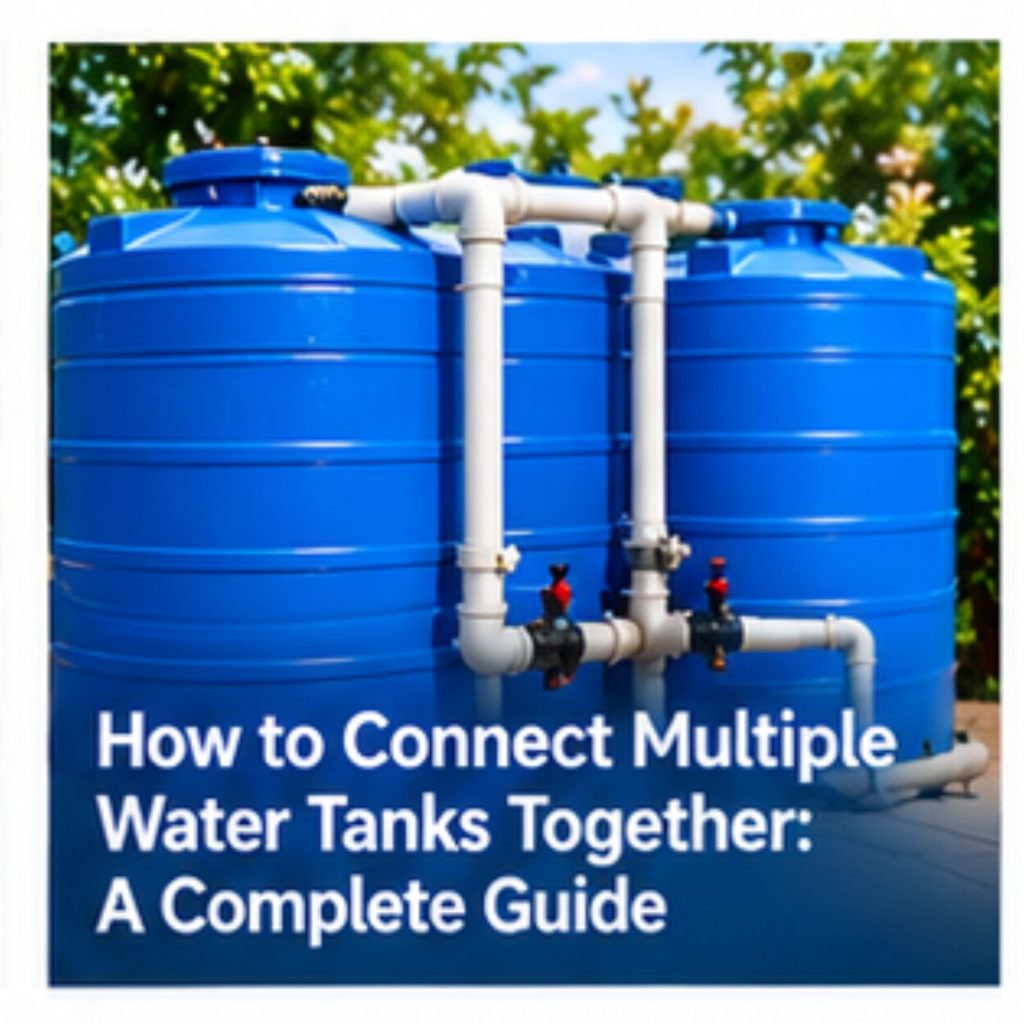
How to Connect Multiple Water Tanks Together: A Complete Guide
Jul
How to Connect Multiple Water Tanks Together | Complete Installation Guide
Learn how to connect multiple water tanks together using balanced pipework, manifolds and overflow systems. Discover the best methods for homes, farms and commercial water storage systems.
Primary Keywords
- connect multiple water tanks
- linking water tanks
- interconnecting water tanks
- water tank manifold
- connecting rainwater tanks
Secondary Keywords
- balance pipe
- water tank plumbing
- tank overflow
- bulkhead fitting
- rainwater harvesting
- water storage expansion
How to Connect Multiple Water Tanks Together
As your water storage needs grow, installing additional tanks is often more practical than replacing your existing one with a larger unit. Interconnecting tanks allows you to increase storage capacity, improve flexibility and make better use of available space.
Whether you’re expanding a rainwater harvesting system, adding municipal backup storage or increasing capacity on a farm, connecting multiple tanks correctly is essential for even water distribution and reliable performance.
This guide explains the most common methods of connecting water tanks and the key design principles to ensure the system works efficiently.
Why Connect Multiple Water Tanks?
There are several advantages to linking tanks together instead of relying on a single large tank.
Benefits include:
- Increased storage capacity.
- Easier transportation and installation.
- Flexibility to expand over time.
- Improved redundancy if one tank requires maintenance.
- Better use of irregular spaces.
- Simplified replacement of individual tanks if required.
Many homeowners begin with one tank and add more as their water requirements increase.
Common Tank Connection Methods
There are several ways to interconnect tanks, depending on the layout and application.
Bottom Balance Pipe System
This is the most common method.
A pipe connects the lower outlets of each tank, allowing water to move freely between them.
As water enters or leaves the system, the water level equalises naturally across all connected tanks.
Advantages
- Excellent water balancing.
- Efficient use of total storage.
- Simple operation.
- Suitable for gravity-fed and pumped systems.
Top Balance Pipe
Some installations use balance pipes near the top of the tanks.
These are often used in conjunction with bottom connections to assist with overflow management and air equalisation.
Common Manifold System
Each tank connects individually to a central manifold.
This approach is common in:
- Commercial systems.
- Large agricultural installations.
- Industrial applications.
It allows individual tanks to be isolated for maintenance without shutting down the entire storage system.
Pumped Transfer Systems
Where tanks are located at different elevations or significant distances apart, transfer pumps may be used.
Automatic level controls can transfer water from one tank to another as required.
Should All Tanks Be the Same Size?
Not necessarily.
However, using tanks with similar capacities often results in more even water levels and simpler plumbing design.
When tanks of different sizes are connected, careful planning is needed to ensure balanced filling and emptying.
Filling Multiple Tanks
There are two common approaches.
Shared Inlet
Water enters one tank, then flows through the balance pipe to fill the others.
This is suitable for many domestic installations.
Distributed Inlets
Each tank has its own inlet supplied from a common distribution pipe.
This method is often used for larger commercial systems where faster filling is required.
Managing Overflows
Every tank should have an overflow outlet.
In interconnected systems:
- Overflow pipes should be sized correctly.
- Water should discharge safely away from buildings and foundations.
- Screens can help prevent insects and debris from entering the system.
Proper overflow design is especially important in heavy rainfall areas.
Pump Placement
The pump is usually connected:
- To the common balance pipe, or
- To a dedicated outlet manifold.
This allows the pump to draw water evenly from the combined storage rather than from a single tank.
Pipe Sizing Matters
Undersized balance pipes can restrict water movement between tanks.
This may result in:
- Uneven water levels.
- Overflow from one tank while others remain partially empty.
- Reduced system efficiency.
Pipe diameter should be selected according to the number of tanks, expected flow rates and manufacturer’s recommendations.
Installing Isolation Valves
Isolation valves allow individual tanks to be disconnected for:
- Cleaning.
- Maintenance.
- Repairs.
- Future expansion.
Without isolation valves, servicing one tank may require shutting down the entire system.
Planning for Expansion
When designing your first installation, consider leaving space for:
- Additional tanks.
- Larger balance pipes.
- Extra valves.
- Additional pumps.
- Filtration upgrades.
Planning ahead makes future expansion easier and more cost-effective.
Common Installation Mistakes
Avoid these common errors:
- Using balance pipes that are too small.
- Installing tanks on different levels without proper design.
- Forgetting isolation valves.
- Providing inadequate overflow capacity.
- Restricting maintenance access.
- Connecting pumps to only one tank in a multi-tank system.
Careful planning helps ensure all tanks operate as a single, efficient storage system.
Maintenance Tips
Inspect the interconnected system regularly.
Check:
- Pipe joints.
- Valves.
- Overflow outlets.
- Tank levels.
- Pump operation.
- Foundation stability.
- Bulkhead fittings.
Routine inspections help identify leaks and wear before they become significant problems.
Frequently Asked Questions
Can different brands of water tanks be connected together?
In many cases, yes, provided the plumbing design, fittings and outlet sizes are compatible. Always verify compatibility before installation.
Will all connected tanks fill evenly?
A properly designed balance pipe system allows water levels to equalise naturally. Poor pipe sizing or incorrect installation can lead to uneven filling.
Can I add more tanks later?
Yes. Many systems are designed to be expanded as water storage requirements increase. Planning for future connections during the initial installation can simplify this process.
Do I need a separate pump for each tank?
Not usually. A single appropriately sized pump can often supply water from multiple interconnected tanks when connected to the common outlet manifold or balance pipe.
Conclusion
Connecting multiple water tanks is an effective way to increase storage capacity while maintaining flexibility for future expansion. By using correctly sized balance pipes, installing suitable valves and planning for proper overflow management, you can create a reliable water storage system that performs efficiently for many years.
Whether you’re expanding a residential rainwater harvesting system or designing a large agricultural installation, careful planning and quality components are key to long-term success.
Related Articles
Continue exploring our Water Storage Knowledge Centre:
- The Complete Guide to Water Storage Tanks
- How to Choose the Right Water Tank
- How to Calculate Water Tank Size
- Water Tank Installation Guide
- Polyethylene Water Tanks Explained
- Water Tank Maintenance Guide
- How to Clean a Water Storage Tank
- Water Tank Accessories Explained
- Rainwater Harvesting Explained
- Choosing the Right Water Pump for Your Water Tank
Technical Design Considerations
When designing multi-tank systems, aim for balanced hydraulic performance. Keeping tanks at the same elevation, using adequately sized balance pipes and positioning pumps to draw from the combined storage helps ensure even water levels and efficient operation. For larger or more complex installations, consulting the tank and pump manufacturers’ recommendations—or a qualified installer—can help optimise system performance and simplify future maintenance.
