
Borehole Pumps, Water Filtration, Water Pumps, Water Storage, Water Storage Tanks
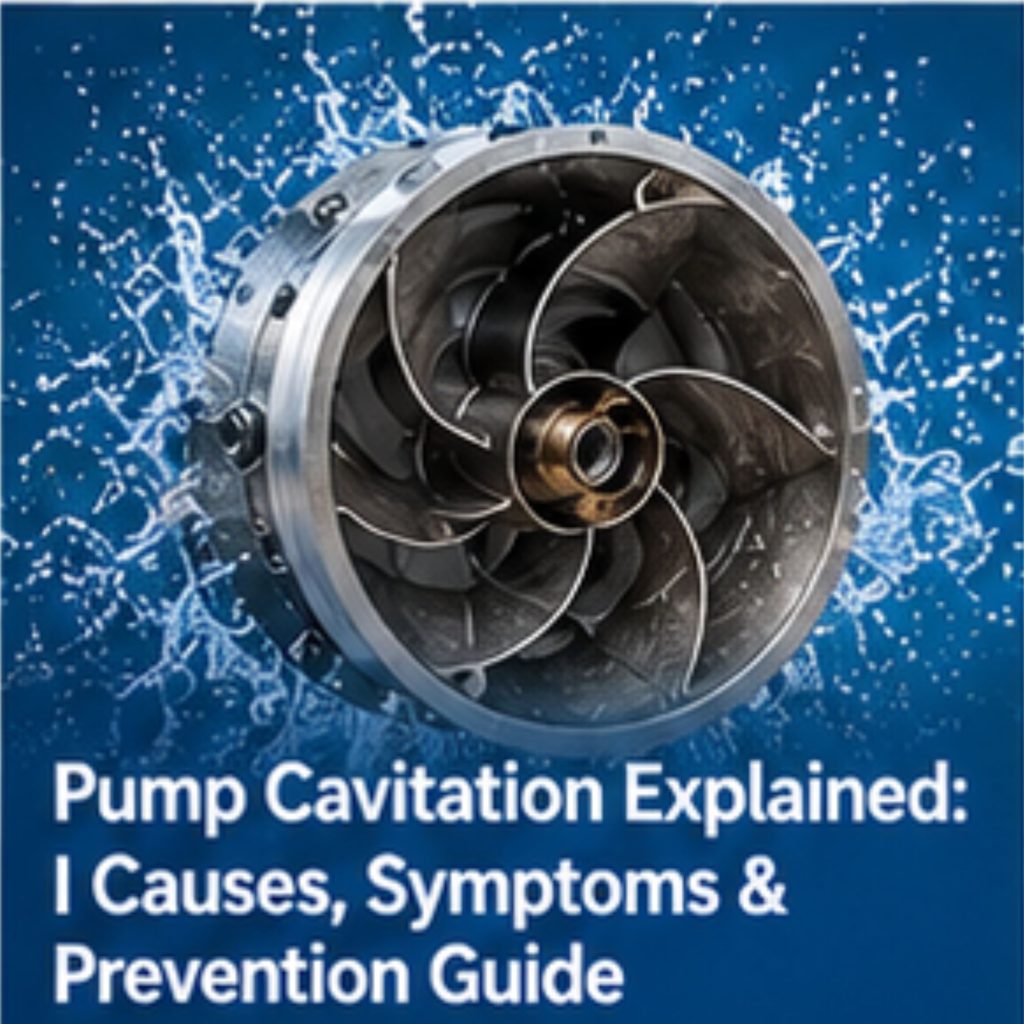
Pump Cavitation Explained | Causes, Symptoms & Prevention Guide
Jul
Learn what pump cavitation is, what causes it, how to recognise the warning signs, how it damages water pumps and practical steps to prevent cavitation in residential, agricultural and industrial systems.
Cavitation Explained: The Hidden Pump Killer
If you’ve ever heard a water pump making a loud rattling, grinding or “gravel” sound, there’s a good chance it was suffering from cavitation.
Cavitation is one of the most destructive conditions that can affect a pump. Left unresolved, it can erode impellers, damage mechanical seals, shorten bearing life and significantly reduce pump performance.
Although cavitation is common, it is often misunderstood. Many people assume the pump is faulty when the real problem lies in the installation or operating conditions.
This guide explains what cavitation is, why it happens, how to recognise it and, most importantly, how to prevent it.
What Is Cavitation?
Cavitation occurs when the pressure inside a pump falls so low that the water begins to form tiny vapour bubbles.
As these bubbles move into areas of higher pressure inside the pump, they collapse suddenly.
This rapid collapse releases a large amount of energy against nearby metal surfaces.
Over time, repeated bubble collapse can damage impellers, diffusers and pump casings.
Why Does Water Form Bubbles?
Water does not only boil when heated.
It can also change into vapour if the pressure becomes low enough.
Inside a pump:
- Pressure drops near the eye of the impeller.
- Tiny vapour bubbles form.
- The bubbles travel through the pump.
- Pressure rises again.
- The bubbles implode.
This repeated cycle creates cavitation.
What Happens During Cavitation?
The process occurs in four stages.
Stage 1 – Pressure Drops
Water enters the impeller.
Pressure decreases rapidly near the centre.
Stage 2 – Vapour Bubbles Form
Small vapour pockets appear.
These are not air bubbles—they are water vapour.
Stage 3 – Pressure Increases
As water moves through the impeller, pressure rises.
Stage 4 – Bubble Collapse
The vapour bubbles implode violently.
The energy released strikes the metal surfaces thousands of times every second.
Why Is Cavitation Dangerous?
Although each collapsing bubble is microscopic, millions of them can occur every second.
This causes:
- Surface pitting.
- Metal erosion.
- Increased vibration.
- Noise.
- Loss of efficiency.
- Mechanical seal damage.
- Bearing wear.
- Impeller failure.
Ignoring cavitation can eventually lead to complete pump failure.
What Does Cavitation Sound Like?
Many people describe cavitation as sounding like:
- Marbles inside the pump.
- Gravel rattling.
- Stones bouncing around.
- Crackling.
- Grinding.
If your pump suddenly becomes unusually noisy, cavitation should be investigated.
Signs of Cavitation
Watch for these symptoms:
- Loud rattling noises.
- Increased vibration.
- Reduced water pressure.
- Lower flow rate.
- Fluctuating pressure.
- Higher electricity consumption.
- Frequent seal failures.
- Bearing damage.
- Pitted impellers.
These symptoms often become worse over time if the underlying cause is not corrected.
What Causes Cavitation?
Insufficient Suction Pressure
If too little water reaches the pump inlet, pressure drops below the vapour pressure of water.
This is one of the most common causes of cavitation.
Excessive Suction Lift
Surface pumps perform best when installed close to the water source.
Long vertical suction lifts increase the risk of cavitation.
Undersized Suction Pipe
A pipe that is too small increases water velocity and friction losses.
This reduces pressure at the pump inlet.
Blocked Filters or Strainers
Debris restricting water flow creates additional suction losses.
Regular cleaning helps prevent this problem.
Closed or Partially Closed Valves
Restriction on the suction side can starve the pump of water.
Isolation valves on the suction line should normally be fully open during operation.
High Water Temperature
Warm water has a higher vapour pressure than cold water.
This makes cavitation more likely in hot water systems.
Pump Operating Too Far from Its Best Efficiency Point (BEP)
Every pump is designed to operate efficiently within a specific flow range.
Operating significantly above or below this range can contribute to cavitation and other performance issues.
The Importance of NPSH
One of the most important concepts related to cavitation is Net Positive Suction Head (NPSH).
There are two values to understand:
NPSH Available (NPSHa)
This is the amount of suction pressure actually available in your system.
It depends on factors such as:
- Atmospheric pressure.
- Water level.
- Pipe friction.
- Water temperature.
NPSH Required (NPSHr)
This is the minimum suction pressure specified by the pump manufacturer for reliable operation.
The Golden Rule
NPSHa should always be greater than NPSHr, with an appropriate safety margin.
If NPSHa is too low, cavitation is likely to occur.
How to Prevent Cavitation
Most cavitation problems can be avoided with good system design.
Install the Pump Close to the Water Source
Reducing suction lift helps maintain higher inlet pressure.
Use Larger Suction Pipes
Larger pipes reduce friction losses and improve water flow to the pump.
Avoid Sharp Bends
Every bend, elbow and restriction increases friction.
Keep suction pipework as straight and short as possible.
Clean Strainers Regularly
Blocked strainers restrict water flow.
Routine cleaning is one of the simplest preventative measures.
Choose the Correct Pump
A pump should operate close to its Best Efficiency Point.
Oversized and undersized pumps are both more likely to experience operational problems.
Monitor Water Levels
Ensure tanks, reservoirs and wells maintain sufficient water above the suction inlet during operation.
Can Cavitation Be Repaired?
The damage caused by cavitation cannot usually be reversed.
Depending on the severity, repairs may involve replacing:
- Impellers.
- Mechanical seals.
- Bearings.
- Diffusers.
- Pump casing components.
Correcting the underlying cause is essential to prevent repeat failures.
Frequently Asked Questions
Is cavitation the same as air in the pump?
No. Cavitation is caused by vapour bubbles forming because of low pressure. Air entering through a suction leak is a different problem, although the symptoms can sometimes appear similar.
Can cavitation destroy a pump?
Yes. If left unresolved, cavitation can cause significant damage to impellers, seals, bearings and other internal components.
Does cavitation increase electricity consumption?
Yes. A pump affected by cavitation often operates less efficiently, meaning it may consume more energy to deliver less water.
Are all pumps susceptible to cavitation?
Most centrifugal pumps can experience cavitation if the installation or operating conditions result in insufficient suction pressure.
Conclusion
Cavitation is one of the most common—and costly—causes of pump damage. By understanding how it develops and recognising the warning signs early, you can protect your equipment, improve efficiency and reduce maintenance costs.
Correct pump sizing, proper suction pipe design, adequate water supply and regular maintenance all play an important role in preventing cavitation. Investing time in good system design today can save significant repair costs in the future.
Related Articles
Expand your knowledge with these expert guides:
- Understanding Total Dynamic Head (TDH)
- How to Read Water Pump Performance Curves
- Centrifugal Pumps Explained
- Mechanical Seals Explained
- Common Water Pump Problems and How to Fix Them
- Foot Valves vs Non-Return Valves
- How to Choose the Right Water Pump
- Understanding NPSH (Net Positive Suction Head) (Coming Soon)
- Water Hammer Explained (Coming Soon)
