
Uncategorized
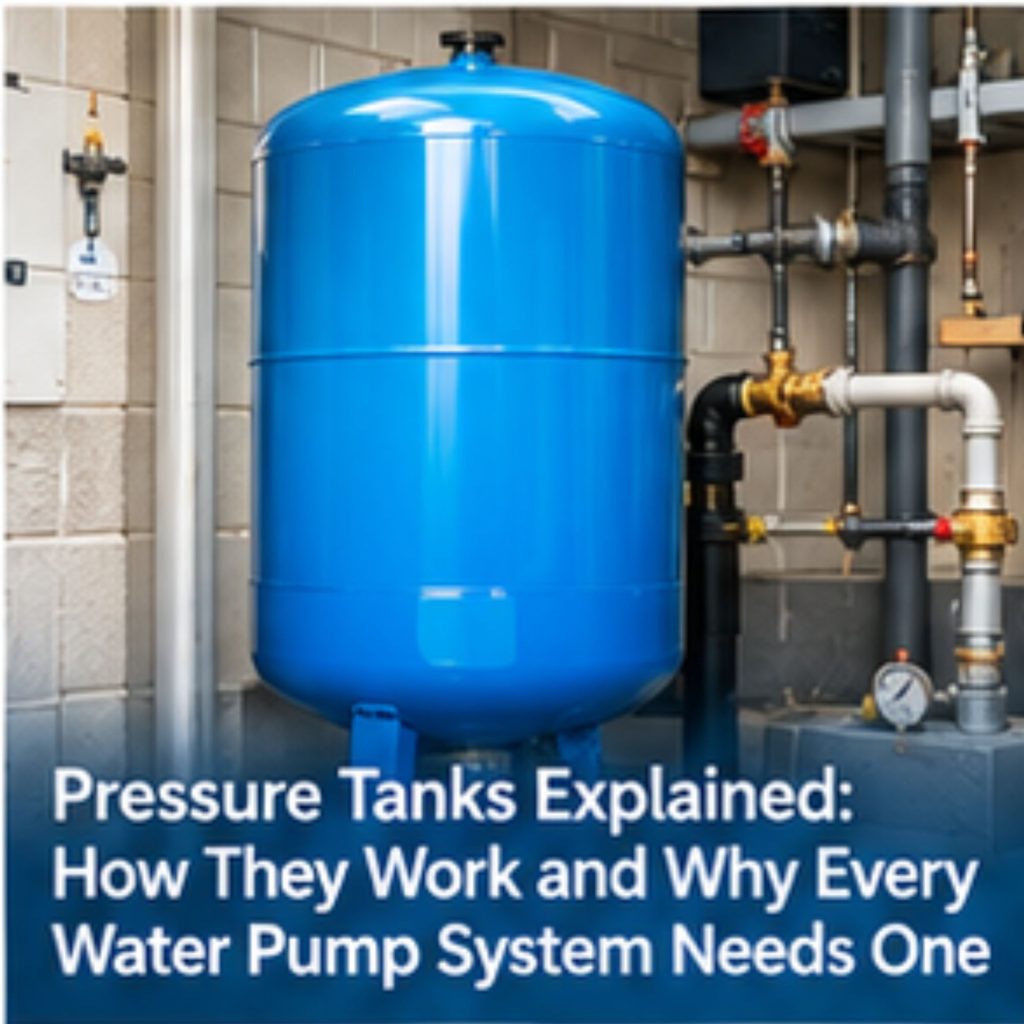
Pressure Tanks Explained: How They Work and Why Every Water Pump System Needs One
Jul
Pressure Tanks Explained | How Pressure Tanks Work & How to Choose the Right Size
Learn how pressure tanks work, why they are important, how to size one correctly, common problems, maintenance tips and how they protect your water pump.
Pressure Tanks Explained: The Complete Homeowner’s Guide
A pressure tank is one of the most important—but often overlooked—components of a water pumping system. Whether your water comes from a borehole, rainwater harvesting system, municipal supply or storage tank, a pressure tank helps deliver smooth, consistent water pressure while protecting your pump from unnecessary wear.
Without a pressure tank, your pump may start and stop every time a tap is opened. This frequent cycling increases electricity consumption, shortens the life of the pump and motor, and can lead to costly repairs.
In this guide, we’ll explain how pressure tanks work, why they are essential, how to choose the correct size, and how to maintain them for years of reliable service.
What Is a Pressure Tank?
A pressure tank (also called a pressure vessel or expansion tank in some applications) stores water under pressure. It acts as a buffer between your pump and your plumbing system.
Inside the tank is either:
- A flexible rubber bladder, or
- A rubber diaphragm.
One side contains compressed air, while the other contains water.
As water enters the tank, it compresses the air. When a tap is opened, the compressed air pushes the stored water into the plumbing system before the pump needs to start.
This simple principle reduces pump starts, maintains more consistent pressure and improves overall system efficiency.
Why Is a Pressure Tank Important?
Without a pressure tank, your pump would need to start every time even a small amount of water is used.
Imagine washing your hands. Without a pressure tank, the pump might:
- Start
- Stop
- Start again
- Stop again
This repeated cycling places unnecessary stress on the motor, pressure switch and electrical components.
A pressure tank solves this by storing a reserve of pressurised water.
Benefits of a Pressure Tank
Installing a correctly sized pressure tank offers several advantages:
- Reduces pump cycling.
- Extends pump lifespan.
- Provides smoother water pressure.
- Reduces electricity consumption.
- Minimises water hammer.
- Protects pressure switches and controllers.
- Improves shower performance.
- Provides a small reserve of water during short power interruptions.
How Does a Pressure Tank Work?
The operation is surprisingly simple.
Step 1: The Pump Starts
When system pressure drops to the cut-in setting (for example, 2.0 bar), the pressure switch activates the pump.
Step 2: Water Enters the Tank
The pump fills the pressure tank.
As water enters, it compresses the air inside the bladder.
Pressure gradually increases.
Step 3: The Pump Stops
When the cut-out pressure is reached (for example, 3.5 bar), the pressure switch turns the pump off.
The tank is now full of pressurised water.
Step 4: Water Is Used
Opening a tap allows the compressed air inside the tank to push water into the plumbing system.
The pump remains off until the pressure falls back to the cut-in setting.
What’s Inside a Pressure Tank?
Although the outside appears simple, modern pressure tanks contain several important components:
- Steel or composite outer shell.
- Food-grade rubber bladder or diaphragm.
- Air chamber.
- Water chamber.
- Air valve (Schrader valve).
- Water connection.
- Base or mounting bracket.
High-quality tanks use corrosion-resistant materials and NSF-approved internal components suitable for potable water.
Bladder Tanks vs Diaphragm Tanks
There are two common designs.
Bladder Tanks
A replaceable rubber bladder holds the water.
Advantages:
- Water never contacts the steel shell.
- Longer service life.
- Easier maintenance on some models.
- Better corrosion resistance.
Diaphragm Tanks
A fixed rubber diaphragm separates the air and water.
Advantages:
- Compact design.
- Fewer moving parts.
- Widely available.
- Suitable for many residential systems.
Both designs perform well when correctly installed and maintained.
What Is Drawdown?
Drawdown is the amount of water that can be delivered from the pressure tank before the pump needs to restart.
For example:
A 100-litre pressure tank does not provide 100 litres of usable water.
Depending on the pressure settings, the actual drawdown may only be 25 to 35 litres.
The remaining volume is occupied by compressed air, which is essential for the tank to function correctly.
Understanding drawdown is important when sizing a pressure tank.
Choosing the Right Pressure Tank Size
The ideal size depends on several factors:
- Pump flow rate.
- Pump power.
- Household water demand.
- Pressure switch settings.
- Frequency of water use.
- Desired pump run time.
General guide:
| Household Size | Typical Tank Size |
|---|---|
| Small apartment | 24 litres |
| Small home | 50 litres |
| Family home | 80–100 litres |
| Large home | 150 litres |
| Farm or commercial | 200 litres or larger |
Larger tanks generally reduce pump cycling and can extend pump life.
Pressure Switch Settings
Most domestic systems use two pressure settings:
Cut-In Pressure
The pressure at which the pump starts.
Common setting:
2.0 bar
Cut-Out Pressure
The pressure at which the pump stops.
Common setting:
3.5 bar
The difference between these settings is called the pressure differential.
Air Pre-Charge
Every pressure tank contains compressed air.
The air pressure should normally be set approximately 0.2 bar below the pump’s cut-in pressure.
Example:
Pump starts at:
2.0 bar
Tank pre-charge:
1.8 bar
Always check the manufacturer’s instructions before adjusting the air pressure.
Common Pressure Tank Problems
Pump Starts Too Frequently
Possible causes:
- Waterlogged tank.
- Incorrect air pressure.
- Failed bladder.
- Pressure switch issues.
No Water Pressure
Possible causes:
- Empty tank.
- Pump fault.
- Major leak.
- Closed isolation valve.
Tank Feels Completely Full
This may indicate:
- Failed bladder.
- Lost air charge.
- Internal damage.
Water Coming From Air Valve
If water escapes from the Schrader valve, the bladder has almost certainly failed and the tank should be repaired or replaced if possible.
Maintaining a Pressure Tank
Routine maintenance can significantly extend the life of your pressure tank.
At least once a year:
- Check the air pressure.
- Inspect for leaks.
- Test the pressure switch.
- Examine mounting brackets.
- Inspect pipe connections.
- Check for corrosion.
- Listen for unusual pump cycling.
Replacing inexpensive components early can prevent major failures.
Frequently Asked Questions
Do I always need a pressure tank?
Many traditional pressure systems benefit greatly from a pressure tank. Some variable-speed constant-pressure systems may use smaller tanks or specialised expansion vessels, depending on the controller design.
Can a larger pressure tank damage my pump?
No. Within practical limits, a larger pressure tank generally reduces pump cycling, allowing the pump to run for longer, more efficient cycles.
How long does a pressure tank last?
With proper installation and maintenance, a quality pressure tank can often last 8–15 years, although lifespan depends on water quality, operating pressure and usage.
Why does my pump switch on every few seconds?
Rapid cycling is commonly caused by a failed bladder, insufficient air pre-charge, a waterlogged tank or a leak in the system.
Conclusion
A pressure tank is far more than a storage vessel—it is a critical component that protects your pump, improves water pressure and enhances the overall efficiency of your water system. By reducing unnecessary pump starts and maintaining stable pressure, it helps extend the life of your equipment while improving day-to-day comfort.
Whether you’re installing a borehole pump, rainwater harvesting system or domestic pressure booster, choosing the correct pressure tank is one of the smartest investments you can make.
Related Articles
Build your knowledge with these comprehensive guides:
- How to Choose the Right Water Pump
- Water Pressure Explained
- Understanding Total Dynamic Head (TDH)
- How to Read Water Pump Performance Curves
- Booster Pumps Explained
- Surface Pumps vs Submersible Pumps
- Common Water Pump Problems and Solutions
- How to Size a Water Pump Correctly
